
Introduction
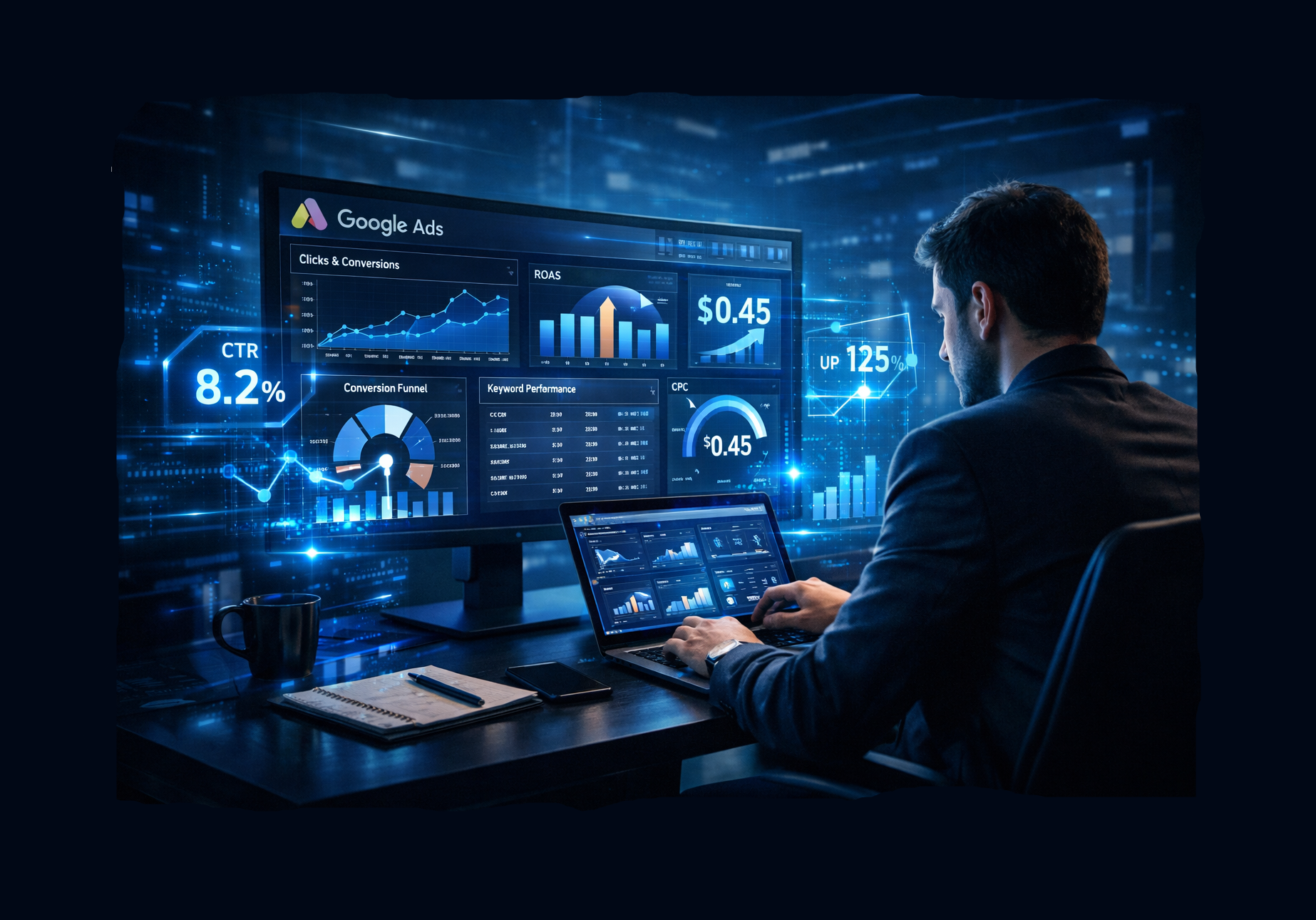
Pay-Per-Click (PPC) advertising is one of the fastest ways to generate targeted traffic, leads, and sales. But simply running ads isn’t enough anymore. With increasing competition, rising CPCs, and smarter algorithms, PPC campaign optimization has become the difference between burning budget and scaling profitably.
This complete guide will walk you through everything you need to know about PPC campaign optimization – from account structure and keyword strategy to ad creatives, bidding, landing pages, and advanced optimization techniques. Whether you’re running Google Ads, Bing Ads, or paid social campaigns, this guide will help you maximize ROI and performance.
What Is PPC Campaign Optimization?
PPC campaign optimization is the ongoing process of improving paid advertising campaigns to achieve better results – such as lower cost per click (CPC), higher conversion rates, better Quality Scores, and improved return on ad spend (ROAS).
Optimization isn’t a one-time task. It involves continuous testing, analysis, and refinement across multiple elements:
- Keywords
- Ad copy
- Bidding strategies
- Targeting
- Landing pages
- Audience signals
- Performance data
Why PPC Optimization Is Critical for Success
Without optimization, even high budgets can fail. Here’s why PPC campaign optimization matters:
- Reduces wasted ad spend
- Improves Quality Score
- Increases conversion rates
- Lowers cost per acquisition (CPA)
- Improves ad relevance
- Helps scale profitable campaigns
Optimized PPC campaigns don’t just bring traffic – they bring the right traffic that converts.
Step 1: Build a Strong PPC Account Structure
A clean account structure is the foundation of PPC optimization.
Best Practices
- Separate campaigns by product, service, or goal
- Use tightly themed ad groups
- Match keywords closely with ad copy
- Keep each ad group focused on one intent
Example:
Instead of one campaign for “Digital Marketing,” break it into:
- SEO Services
- PPC Management
- Social Media Marketing
- Email Marketing
This improves relevance, Quality Score, and CTR.
Step 2: Advanced Keyword Research & Optimization
Keywords drive PPC performance. Poor keyword selection leads to irrelevant clicks and wasted budget.
Keyword Optimization Tips
- Focus on high-intent commercial keywords
- Use a mix of:
- Exact match
- Phrase match
- Broad match (with smart bidding)
- Continuously review Search Terms Reports
- Add negative keywords regularly
High-Intent Keyword Examples
- “PPC agency near me”
- “Google Ads management services”
- “Hire PPC expert”
Avoid vague or informational terms unless you’re running awareness campaigns.
Step 3: Write High-Converting Ad Copy
Your ad copy must align perfectly with search intent.
Ad Copy Optimization Best Practices
- Include primary keyword in headline
- Highlight unique value propositions (USP)
- Use clear CTAs (Call Now, Get Quote, Book Demo)
- Address pain points and benefits
- Test emotional vs. logical messaging
Use Ad Extensions
- Sitelinks
- Callouts
- Structured snippets
- Call extensions
- Location extensions
Extensions increase visibility, CTR, and Quality Score.
Step 4: Optimize Bidding Strategies
Choosing the right bidding strategy is essential for PPC success.
Common Bidding Strategies
- Manual CPC (control-focused)
- Maximize Clicks
- Maximize Conversions
- Target CPA
- Target ROAS
Optimization Tip
Start with manual or maximize clicks to gather data, then shift to smart bidding once you have enough conversions.
Monitor performance regularly-automation still needs human oversight.
Step 5: Improve Landing Page Experience
A great ad won’t convert if the landing page fails.
Landing Page Optimization Checklist
- Message match between ad and page
- Clear headline and CTA
- Fast loading speed
- Mobile optimization
- Simple forms
- Trust signals (reviews, certifications)
Landing page quality directly impacts conversion rate and Quality Score.
Step 6: Audience & Targeting Optimization
PPC isn’t just about keywords anymore.
Audience Optimization Tactics
- Remarketing lists
- Customer match
- In-market audiences
- Custom intent audiences
- Lookalike audiences (for paid social)
Use audience layering to improve relevance and reduce CPA.
Step 7: Conversion Tracking & Analytics
You can’t optimize what you don’t measure.
Must-Track Conversions
- Form submissions
- Phone calls
- Purchases
- Demo bookings
- Newsletter signups
Use tools like:
- Google Tag Manager
- Google Analytics 4
- Conversion tracking pixels
Analyze metrics such as:
- CTR
- CPC
- CPA
- ROAS
- Conversion rate
Step 8: A/B Testing & Continuous Optimization
Testing is the heart of PPC optimization.
What to A/B Test
- Headlines
- Descriptions
- CTAs
- Landing pages
- Bidding strategies
- Audience segments
Test one variable at a time and let data – not assumptions – drive decisions.
Common PPC Optimization Mistakes to Avoid
- Ignoring negative keywords
- Sending traffic to generic pages
- Not tracking conversions
- Over-relying on automation
- Focusing only on clicks instead of conversions
- Not optimizing for mobile users
Conclusion
PPC campaign optimization is an ongoing process, not a setup-and-forget strategy. The most successful advertisers continuously analyze data, test creatives, refine targeting, and improve landing experiences.
When done correctly, PPC optimization leads to lower costs, higher conversions, and scalable growth – making it one of the most powerful digital marketing channels available today.
Frequently Asked Questions
What is PPC campaign optimization?
PPC campaign optimization is the process of improving paid advertising campaigns to increase performance, reduce costs, and maximize conversions through continuous testing and analysis.
How often should PPC campaigns be optimized?
PPC campaigns should be reviewed weekly and optimized regularly based on performance data, keyword trends, and conversion insights.
What metrics are most important for PPC optimization?
Key metrics include CTR, CPC, Quality Score, CPA, ROAS, conversion rate, and impression share.
How do negative keywords help PPC optimization?
Negative keywords prevent ads from showing for irrelevant searches, reducing wasted spend and improving overall campaign efficiency.
Is landing page optimization important for PPC success?
Yes, landing page optimization significantly impacts conversion rates and Quality Scores, making it a critical part of PPC optimization.
Leave a Reply