ABM Lead Generation Services for B2B Tech Companies
ABM (account-based marketing) lead generation means choosing the specific companies you want as customers first, then reaching the decision-makers inside them with coordinated, personalised outreach. MindMark runs ABM programs for B2B tech companies, combining intent data, LinkedIn and cold email to turn a target account list into sales conversations.
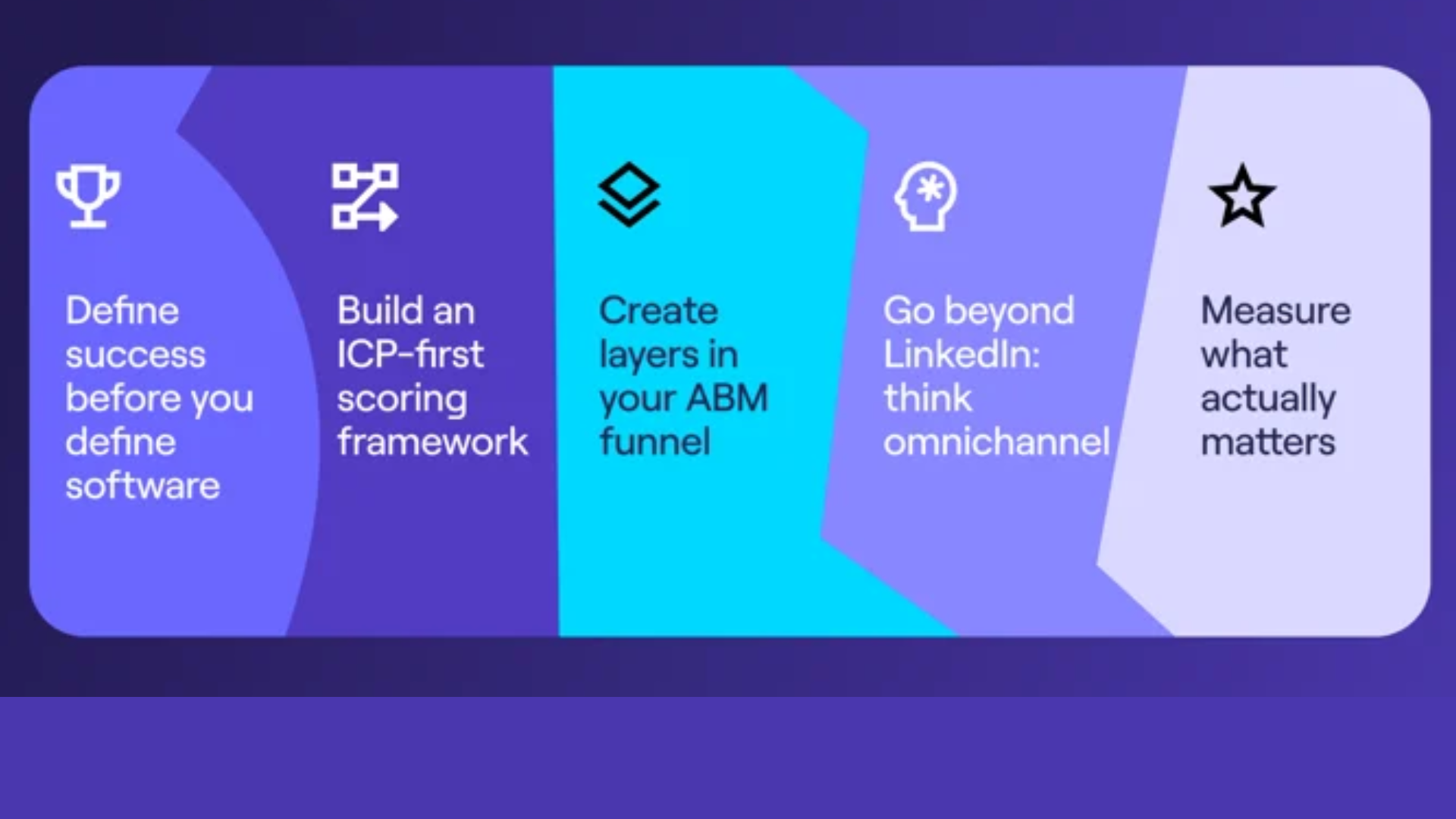
ABM vs traditional lead generation
| Traditional lead generation | ABM lead generation | |
|---|---|---|
| Starting point | A broad audience or keyword | A defined list of target accounts |
| Goal | Volume of leads | Pipeline from the right accounts |
| Messaging | One message for many | Tailored to each account and role |
| Who you reach | Whoever responds | Multiple stakeholders in the buying committee |
| Success metric | Cost per lead | Accounts engaged, meetings booked, pipeline created |
| Best for | Low-ticket, high-volume sales | High-value B2B deals with long cycles |
Traditional lead generation fills the top of the funnel. ABM concentrates effort on the accounts that are actually worth winning. Most B2B tech companies selling deals above a few thousand dollars a year get better pipeline from ABM, because a handful of right-fit accounts is worth more than hundreds of unqualified leads.
How MindMark runs ABM
1. Define your ideal customer profile
We work with your sales team to pin down the firmographics, technographics and buying triggers that describe your best customers, then build a target account list around them.
2. Research accounts with intent data
We prioritise accounts showing buying signals, such as hiring for relevant roles, researching your category, adopting related technology or raising funding. That way outreach reaches accounts when they’re most likely to act.
3. Map the buying committee
For each account we identify the decision-maker, the champion and the influencers, and tailor messaging to what each role cares about.
4. Run coordinated LinkedIn and email outreach
LinkedIn ads warm up target accounts while personalised LinkedIn outreach and cold email sequences start conversations with named stakeholders. The channels run in sync, so prospects see a consistent message across touchpoints.
5. Hand qualified conversations to sales
Interested prospects are booked into meetings with your team, with context on the account and the conversation so far.
6. Report and refine
Every month we review accounts engaged, reply rates, meetings booked and pipeline created, then adjust targeting and messaging.
Channels we use
- LinkedIn ads: account-targeted campaigns that build awareness inside your target companies before and during outreach.
- LinkedIn outreach: personalised connection requests and conversations with decision-makers.
- Cold email sequences: multi-step, role-specific sequences on properly set-up sending infrastructure, to protect deliverability.
- Intent data and account research: signals that tell us which accounts to prioritise and what to say to them.
Who ABM is right for
ABM is a good fit if you:
- sell B2B software or tech services with a meaningful deal size
- have a sales team that can take meetings and run a sales cycle
- can name the types of companies you want to win
- sell to buying committees rather than single buyers
ABM is probably not right if you:
- sell low-cost products where volume matters more than account fit
- have no sales capacity to follow up on conversations
- are still unclear on who your ideal customer is. In that case we’d start with positioning and ICP work first.
Markets we serve
We run ABM programs for B2B tech companies selling into the UAE, the Philippines, Australia and India.













Engagement model
ABM programs run for 3 to 6 months on a monthly retainer. The first month covers ICP definition, account research and outreach setup. Campaigns go live from month two, and we review results and refine targeting every month. A 3–6 month window gives enough time to reach target accounts across several touchpoints and see real pipeline movement, which a one-off campaign rarely does.
Frequently asked questions
Account-based marketing services help B2B companies win specific high-value accounts, instead of generating leads from a broad audience. They typically include target account selection, account research, buying-committee mapping, personalised multi-channel outreach and reporting on account engagement and pipeline.
Lead generation aims to capture as many potential buyers as possible, then qualifies them. ABM works in reverse: you choose the accounts you want first, then engage the people inside them. ABM trades volume for precision, and suits B2B companies with high deal values.
Most programs need 3 to 6 months. The first month goes into research and setup, and engagement from target accounts builds over the following months as prospects see repeated, relevant touchpoints.
MindMark runs ABM on a monthly retainer, with the scope set by the number of target accounts, the markets involved and the channels used. Book a call to get a quote for your program.
For B2B tech, LinkedIn and email are usually the core channels: LinkedIn ads build awareness inside target accounts, while LinkedIn outreach and cold email start direct conversations. Intent data helps decide which accounts to prioritise.
Yes. We run ABM programs for B2B tech companies selling into the UAE, the Philippines, Australia and India.